
Before your visit
How to prepare your home before the cleaners arrive
Clear flat surfaces and floors, sort the pets, and tell the cleaner the one thing that bothers you most. That covers nearly all of it. The rest is optional.
By Hygiene Maids of Plano6 min read
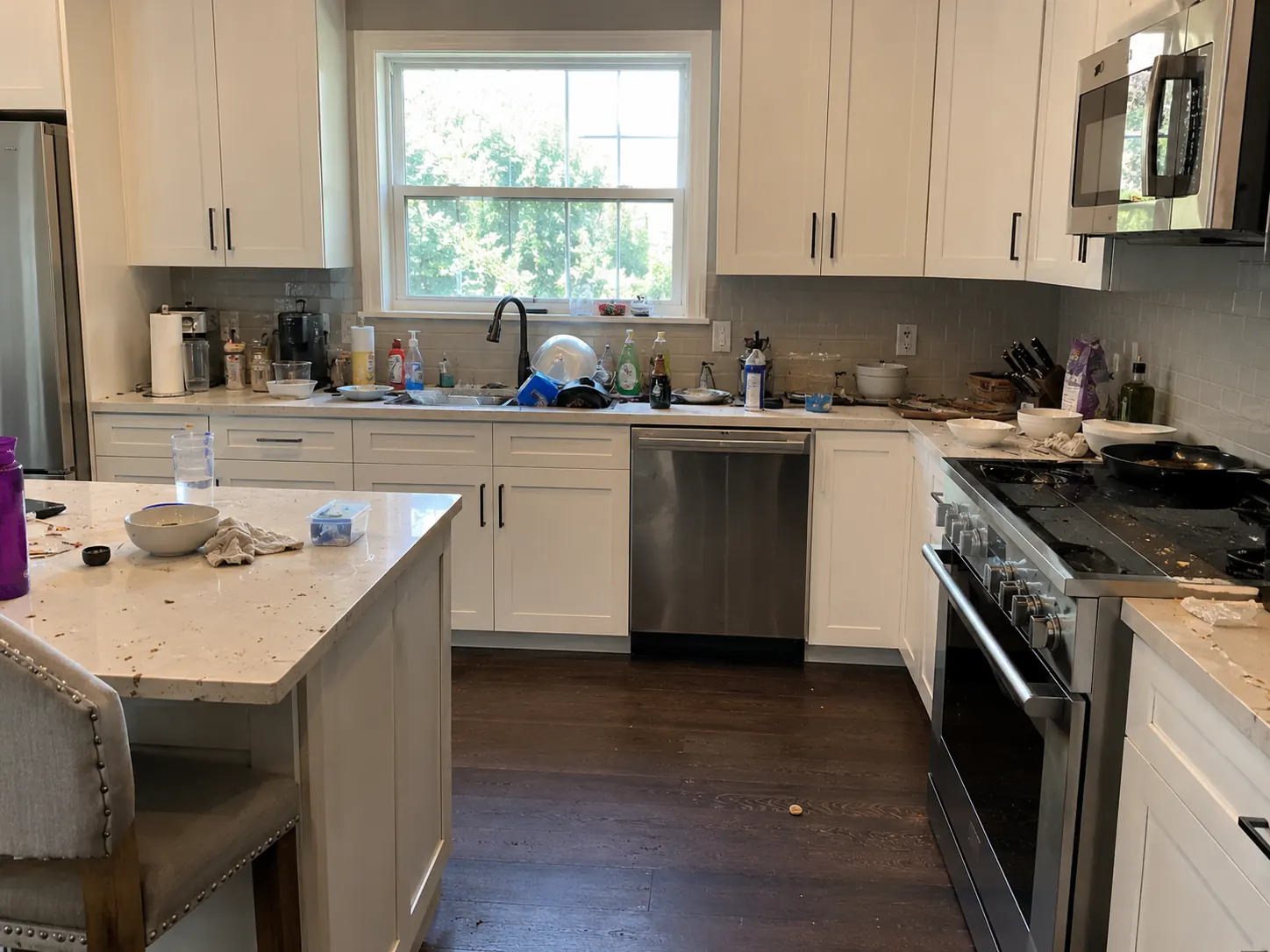
People usually ask this worried they’ll be judged for the state of the house. Set that aside. Cleaners see homes in every condition and it stopped being interesting to them years ago.
The real reason preparation matters is arithmetic.
You’re buying a block of time. Anything a cleaner has to move, sort or work around comes out of that block, and relocating your belongings is the lowest-value thing they could be doing with it.
Why preparation changes the result
Cleaners clean surfaces. Put fourteen items on a counter and there are three options: clean around them, move them and put them back, or leave that counter mostly alone. Two of those cost time. The third costs you the counter.
Now multiply it across a kitchen, three bathroom vanities, four bedside tables, a dining table and the floors. A quarter of a visit can disappear into shifting things about. Clearing them first converts all of that straight into cleaning.
The fifteen-minute version
If you do nothing else, do these five. They’re ordered by how much difference each makes.
- 01
Clear flat surfaces
Kitchen counters, bathroom vanities, bedside tables, the dining table, coffee table, desks. Into a drawer, a basket, anywhere at all. Cleared surfaces get cleaned properly. Cluttered ones get worked around.
- 02
Clear the floors
Shoes, toys, laundry, bags, pet bowls, charging cables. Floors are the biggest surface in the house and the one most slowed down by obstacles.
- 03
Deal with the dishes
A full sink usually means the sink itself can’t be cleaned. Into the dishwasher, or at minimum out of the basin and stacked to one side.
- 04
Sort the pets
Crate, closed room, yard, or out of the house. Whatever suits the animal. Even friendly pets slow a visit down, and vacuums make plenty of them anxious.
- 05
Put valuables away
Not because anything is likely to happen, but because it removes the question entirely. Cash, jewelry, documents, medication. Two minutes.
What to tell your cleaner
This is the part most people skip, and it does more for the outcome than any amount of tidying.
The one thing that bothers you most
Nearly every household has one. The shower glass. The floors. The oven. A room that’s quietly become storage. Say it out loud and the visit gets planned around it. Leave it unsaid and it becomes one item among fifty, and you’ll finish the day still looking at it.
Surfaces that need particular handling
Natural stone that must not meet an acidic cleaner. A sealed wood floor with a specific product. An antique. A finish that marks if you look at it wrong. If you want your own product used, leave it out and say so.
Rooms to leave alone
A home office mid-project. A nursery with a sleeping child. A room doing duty as storage. No need to explain why. Just say which door stays shut.
Anything already damaged
A chipped tile, a cracked pane, a scratched counter, a wobbly fixture. Mentioning it up front saves an awkward conversation later about whether it happened during the visit.
Worth mentioning when you book
- The single thing bothering you most
- Surfaces needing a specific product
- Rooms to skip entirely
- Existing damage or fragile items
- Pets and where they will be
- Alarm code and how long it takes to disarm
- Where to park, and any gate or building code
- Whether anyone will be home
Access, pets and parking
Most late starts are access problems rather than traffic. Confirm these before the day:
- How we get in. Someone home, a lockbox, a key left somewhere, a code. In an apartment complex, include the gate code, which building entrance, and whether visitors have to be registered. There’s more on that in apartment cleaning.
- Alarms. The code, and how long the delay is before it triggers.
- Parking. Driveway, street, visitor bay, permit needed. A team carrying equipment two hundred yards is burning your time.
- Utilities. Rarely an issue in an occupied home. Essential for an empty one, because cleaning needs water and power.
What not to bother doing
Skip these entirely:
- Pre-cleaning. Don’t scrub the bathroom before the cleaner arrives. That’s literally what you’re paying for.
- Apologizing for the house. Nobody’s keeping score.
- Being home the whole time. Most people aren’t. Either way is fine.
- Providing supplies. Cleaners bring what the booked service needs. Leave something out only if you want that specific product used.
- Deep-tidying every drawer. Surfaces and floors are what matter. Inside cabinets isn’t part of a standard visit anyway.
If it is your first visit
Two things are worth doing once and never repeating.
Walk the house with the cleaner at the start, if you can be there. Five minutes pointing out priorities, quirks and closed doors saves considerably more than five minutes later.
Be honest about condition when you book. If it hasn’t been cleaned in a year, saying so gets the right service booked. Under-describing it results in a visit scoped for a job that doesn’t exist. See standard vs deep cleaning.
Afterwards: the walk-through
Walk the house while it’s fresh. Best moment to spot anything missed, and far easier to resolve on the day than a week later.
If an area we cleaned was missed or you’re not satisfied with it, tell us and we’ll come back within 24 hours at no additional cleaning charge, subject to the terms of our satisfaction guarantee. Call or text (469) 649-7223.
On a recurring schedule, feedback compounds. Preferences get noted and carried between visits, so the second and third cleans fit your house noticeably better than the first.