
Post-construction
What does post-construction cleaning include?
Fine dust, residue removal and repeat passes. Two checks tell you whether you need this service or an ordinary deep clean: the top of a door frame, and a window track.
By Hygiene Maids of Plano7 min read
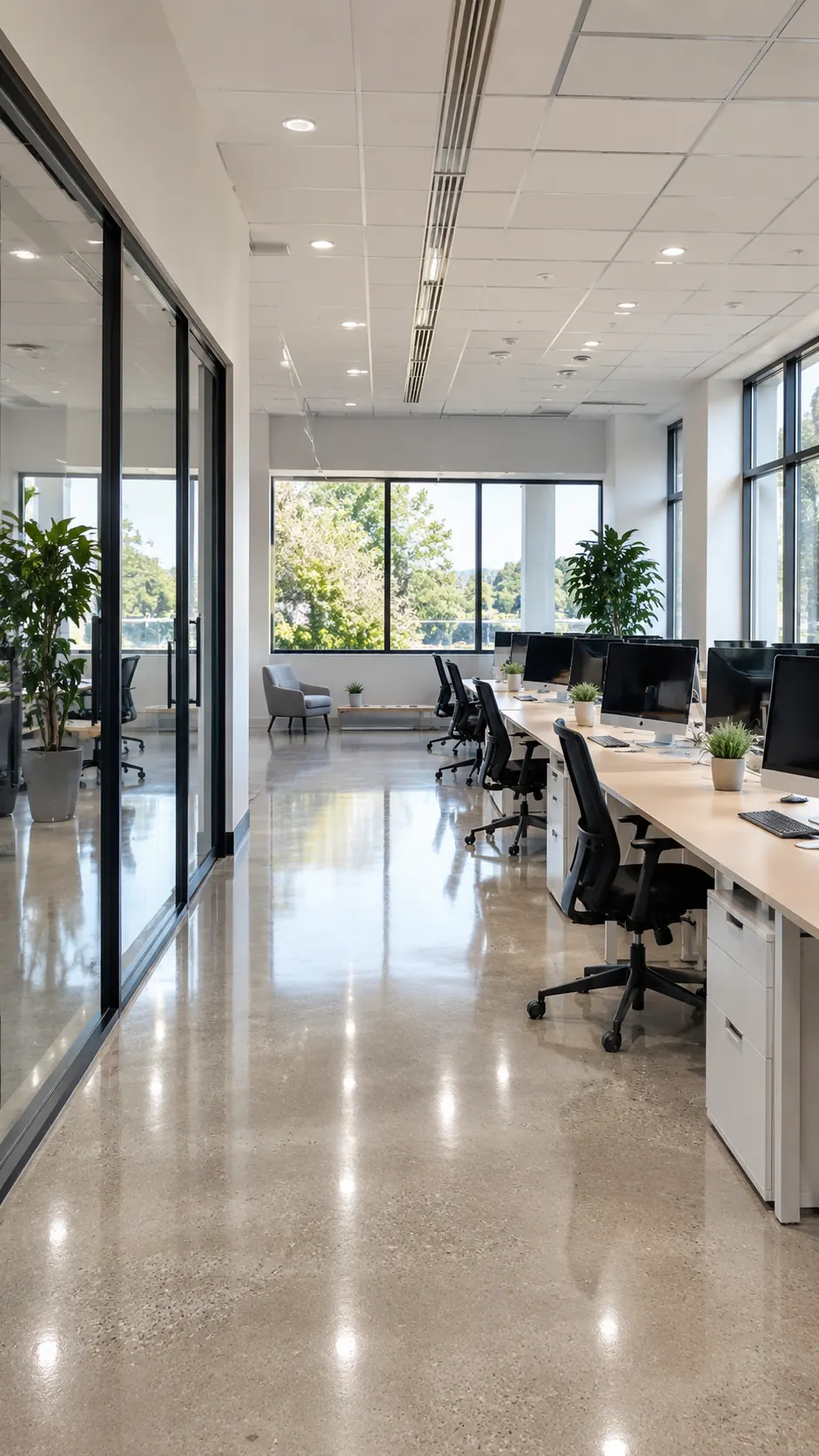
Ask anyone who’s lived through a remodel what surprised them most about the end of it, and a good number will say the same thing: they cleaned, and two days later the house was covered again.
That isn’t bad luck, and it isn’t a sign the first clean was careless. It’s how construction dust behaves.
Why the dust is the problem
Household dust is mostly fabric fiber, skin and soil tracked in from outside. It falls fairly close to where it’s made and it stays put.
Drywall and sanding dust doesn’t. The particles are small enough to stay airborne for hours after the last cut, which gives them time to drift into every room in the property before they settle. Then they settle everywhere at once, including places nobody thinks to look.
Where it ends up
- Top edges of door frames and doors
- Above upper cabinets and on ledges
- Inside window tracks and channels
- HVAC vents, returns and duct openings
- Behind and along trim and baseboards
- Ceiling fan blades and light fittings
- Inside closets and cabinets, even closed ones
- On top of high shelving and casework
There’s a second issue. This dust is abrasive. Wiping a dry cloth across a dusty new countertop or a freshly installed glass panel can leave fine scratches you’ll be looking at for years. Method matters more here than in any other kind of cleaning, which is one of the reasons it’s treated as its own service rather than a longer deep clean.
Rough, final, touch-up
On a larger project, post-construction cleaning usually happens in more than one stage. Knowing the vocabulary helps when you’re talking to a builder about who’s doing what.
- 01
Rough clean
Debris removal and a broad sweep, usually while trades are still working. It keeps the site usable. It isn’t meant to produce a finished result, and it shouldn’t be confused with one.
- 02
Final clean
What most people mean by post-construction cleaning. Everything below in the scope section, worked top-down, after the last trade has finished and left.
- 03
Touch-up clean
A lighter pass a few days later, once the dust that was still airborne during the final clean has had time to come down. On a large project this is the difference between a property that stays clean and one that looks dusty again by the weekend.
Small jobs often only need the final clean. Whole-house remodels almost always benefit from the touch-up as well, and it’s worth asking about rather than assuming it’s included.
What the final clean covers
Dust removal, top down
- Ceilings, fans, light fittings and upper ledges
- Tops of door frames, cabinets and trim
- Walls wiped where the paint finish allows it
- HVAC vents, returns and reachable duct openings
- Repeat passes as dust continues to settle
- Floors last, once airborne dust has dropped
Fixtures, joinery and glass
- Inside every new cabinet, drawer and closet
- Appliance interiors and exteriors
- Window interiors, sills, frames and tracks
- Switch plates, outlets and door hardware
- Bathroom fixtures, tile and shower enclosures
- Handrails, stair edges and newel posts
A note on the vents. They’re the item most often skipped and the one that causes the most trouble afterwards, because a vent full of drywall dust redistributes it around the property every time the system cycles. If a clean skipped the vents, you’ll know within a week.
Residue is a separate job
Dust is only half of it. Building work leaves behind a collection of things that no amount of dusting will shift:
- Paint flecks and overspray on glass, hardware and floors.
- Caulk smears along edges and joints.
- Adhesive and tape residue where protection was fixed down.
- Grout haze, which sits as a dull film across new tile.
- Manufacturer stickers on windows, appliances and fixtures.
- Protective film on new glass, stainless and worktops.
- Fingerprints and handling marks on everything that was installed by hand.
Each of these needs a different approach, and several of them need care about what they’re being removed from. Grout haze off a polished stone floor is not the same task as grout haze off porcelain tile.
When to book it
After the last trade has finished. Not between trades, and not while anyone is still cutting, sanding or painting.
The most expensive mistake on a remodel is cleaning too early, because the property will be dusty again by that evening and you’ll be paying twice. Touch-up paint is the usual culprit: it tends to be the last thing scheduled, it always generates more dust than people expect, and it happens after everyone has assumed the messy part is over.
Ideally, leave a day or two after the last trade leaves. That gives the heaviest airborne dust time to settle so it can be removed rather than stirred up again. If you’re working to a hard handover or move-in date, say so and the passes get planned backward from it.
What about the builder’s clean?
Most contracts include some form of final clean, and it varies enormously. In practice a builder clean is usually debris removal, a sweep and a general wipe-down. It makes a site presentable enough to hand over.
What it rarely covers: vents, the tops of door frames, inside cabinets, window tracks, grout haze and sticker residue. Those two checks from earlier will tell you which kind of clean you’ve had, and they take less time than reading the contract.
Doing some of it yourself
You can handle parts of this, and there are a few things worth knowing before you start.
- Never dry-wipe a dusty new surface. Vacuum first with a brush attachment, then use a damp microfibre cloth. Dry cloths drag abrasive particles across the finish.
- Change water and cloths constantly. Far more often than feels reasonable. A loaded cloth stops cleaning and starts spreading.
- Use a vacuum with a proper filter. A basic vacuum passes fine dust straight through the exhaust and back into the air, which is how people spend a day cleaning and end up with a dustier house.
- Change the HVAC filter afterwards. Whatever your system caught during the work is sitting in it.
- Leave the floors until the end. Genuinely the end, after every surface above them.
Where it stops being sensible to do yourself is scale and finish risk. A single room is manageable over a weekend. A whole house, or anywhere with new stone, new glass and new cabinetry, is a lot of expensive surfaces to learn on.