
Commercial
Office cleaning checklist for Plano businesses
Split the work into daily, weekly and periodic bands rather than one long list. Restroom load sets your frequency; everything else follows from it.
By Hygiene Maids of Plano7 min read
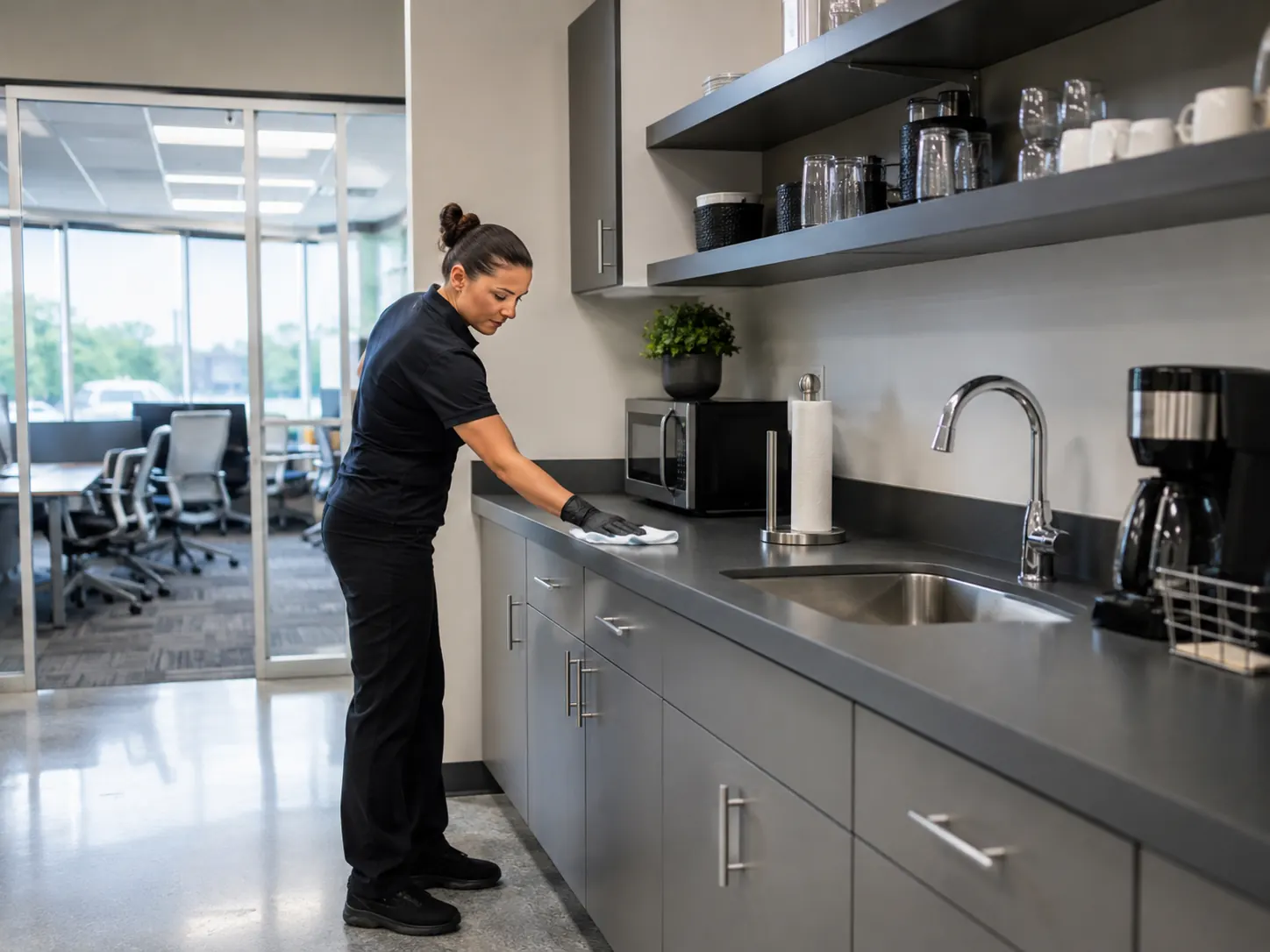
Most office cleaning specifications fail in the same way. Somebody writes one long list of everything that could be cleaned, hands it to a contractor, and then wonders why the meeting room glass looks smeared while the light fittings have been dusted twice.
The fix is boring and effective: split the work by frequency first, scope second.
Why three bands, not one list
Different parts of an office soil at completely different rates. Restrooms and touch points deteriorate hourly. Meeting room glass shows marks over a week. Light fittings and high ledges take months to look like anything.
Putting all three in one list means either paying for high dusting far too often, or having restrooms cleaned far too rarely. Three bands solves it, and it makes the arrangement much easier to hold a contractor to, because “weekly” is checkable in a way that “regularly” isn’t.
Daily
“Daily” here means every scheduled visit, whether that’s five days a week or two. These are the items that make an office feel maintained.
Restrooms — every visit
- All fixtures cleaned and disinfected
- Mirrors, counters and splash areas
- Partitions, doors and handles
- Floors cleaned to the perimeter, behind fixtures
- Waste removed and liners replaced
- Consumable levels checked and reported
- Dispensers wiped and checked
- Odor checked, not masked
Touch points and common areas — every visit
- Door handles, push plates and rails
- Light switches and elevator buttons
- Shared equipment and printer surfaces
- Reception desk and waiting area
- Entrance glass at hand height
- Kitchen and breakroom counters and sinks
- Waste and recycling collected, liners replaced
- Floors in entrances, corridors and high-traffic routes
Meeting rooms — every visit
- Table tops cleaned and reset
- Chairs returned to position
- Whiteboards cleared, where you want them cleared
- Cups, bottles and packaging removed
- Cabling tidied back to position
- Floors vacuumed or spot-cleaned
Weekly
Weekly items
- Desk surfaces where accessible, and monitor stands
- Interior glass, partitions and glazed walls
- Baseboards and floor edges throughout
- Breakroom appliance exteriors and microwave interior
- Refrigerator exterior and handles
- Chair arms, bases and castors
- Window sills and reachable ledges
- Hard floors mopped throughout, not only traffic routes
- Carpet vacuumed including under desks
- Restroom deep detail: grout, dispensers, vent covers
Glass partitions are the item most worth being specific about. Plano’s newer office space is full of them, they show every hand mark, and they’re the surface visitors notice first. A scope that says “glass as required” will produce a different result from one that says “all internal glazing, both faces, weekly”.
Monthly and quarterly
Monthly
- High dusting: ledges, frames, tops of cabinets
- Light fittings and diffusers
- Air vent and return covers
- Upholstered chair fabric
- Behind and under fixed furniture where accessible
- Kitchen cupboard fronts and interiors
- Fire door tops and closers
- Storage and copy rooms
Quarterly or as needed
- Carpet cleaning in high-traffic areas
- Hard floor restoration or machine work
- Full interior window clean
- Blind cleaning
- Refrigerator interior clear-out
- Trash can washing
- Detailed reception and entrance work
- A walk-through review of the scope itself
That last item is easy to skip and worth keeping. Offices change — headcount moves, a meeting room becomes a store room, hybrid patterns shift. A scope written eighteen months ago is often cleaning things nobody uses and missing things everybody does.
Setting your frequency
The single most reliable predictor of how often an office needs cleaning is restroom usage, not floor area and not desk count.
A twelve-person practice where everyone is in five days a week generates more restroom load than a forty-desk office running at a third occupancy. The forty-desk office has more space to vacuum, but space doesn’t deteriorate the way fixtures do.
Roughly where offices land
- Daily or five days: offices at or near capacity, client-facing reception, heavy restroom use.
- Two or three times a week: the most common arrangement across Plano professional suites since hybrid working settled. Schedule the visits around the days people actually come in.
- Weekly: smaller practices and studios with modest headcount and light client traffic.
Cleaning into the busy days
If attendance concentrates midweek, don’t spread visits evenly. An office that’s full Tuesday through Thursday gets more from a Monday evening, Wednesday evening and Thursday evening pattern than from Monday, Wednesday, Friday. You’re cleaning ahead of the load rather than after it has dispersed.
The desk question
Every office scope has to answer this, and vagueness here causes more friction than anything else on the list.
Cleaners clean surfaces. They shouldn’t move, sort or handle papers, equipment or personal items — for obvious reasons around confidentiality and breakage. Which means a desk covered in documents gets cleaned around, not cleaned.
The two arrangements that work:
- Clear-desk on cleaning nights. Staff clear surfaces before leaving on scheduled evenings. Simple, and it produces genuinely clean desks.
- Accessible-surfaces-only, stated explicitly. Cleaners do what’s reachable and leave the rest. Nobody is disappointed, because nobody expected otherwise.
What doesn’t work is leaving it unsaid and hoping. That produces either a complaint about dusty desks or a complaint about moved paperwork, and sometimes both in the same week.
Turning this into a scope
A workable specification needs five things, and most of the arguments in commercial cleaning come from missing one of them.
- What is cleaned, by area, in frequency bands.
- What is explicitly excluded. More important than the inclusions. Kitchen equipment interiors, IT equipment, exterior glass, specialist floor treatments, anything above a stated reach height.
- When. Which days, what hours, and how access works — codes, keys, alarm procedure, building management sign-in.
- Who supplies consumables. Restroom stock, liners, breakroom supplies. Assumed rather than agreed is where this usually goes wrong.
- How problems get raised. Who to contact, expected response, and what happens if something is missed.